
Back to Feed
Medieval · England / Aquitaine, France
The Queen Who Raised an Army Against Her Own Husband
★ 8.8 / 10medieval rebellionPlantagenet dynastyqueensimprisonment
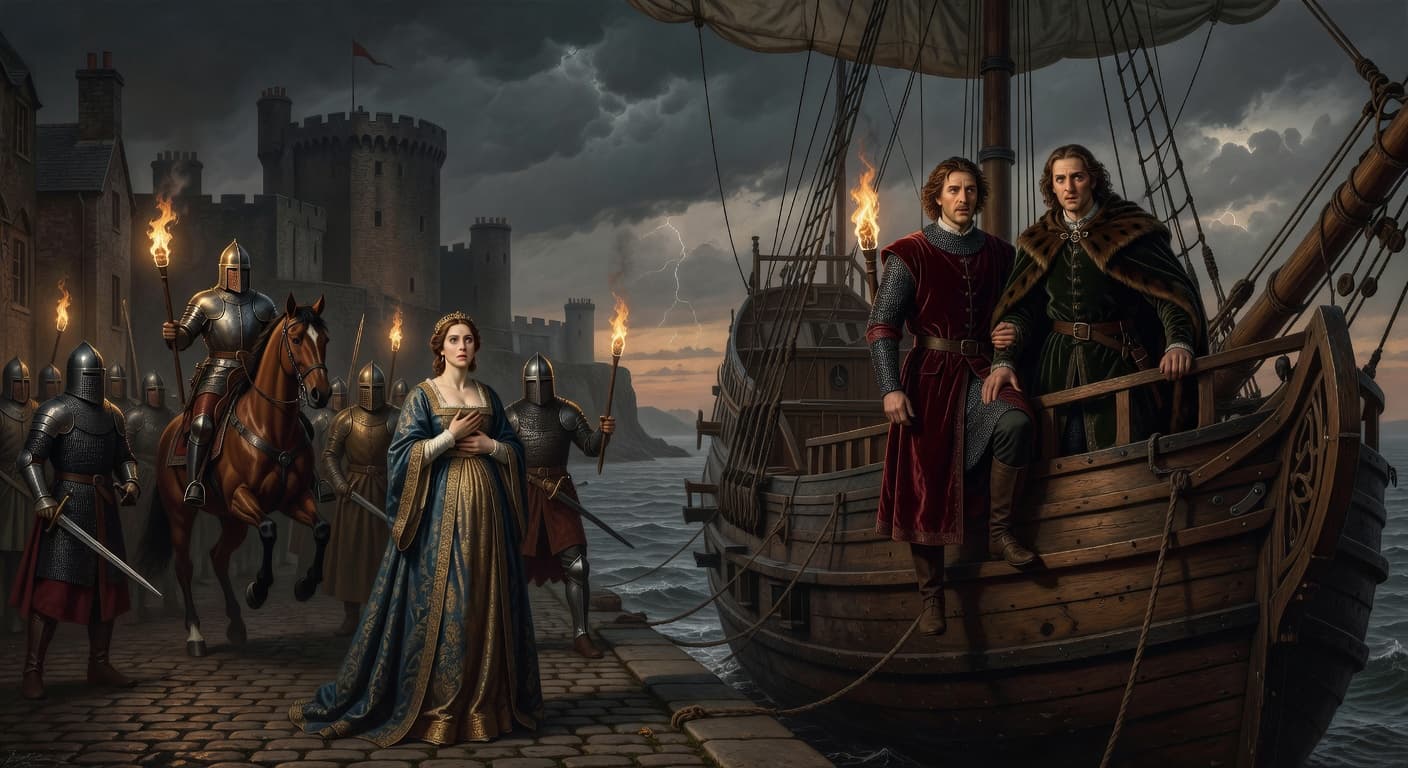
In the spring of 1173, Eleanor of Aquitaine did something that had no precedent in European history: she encouraged her sons to rebel against their father, King Henry II of England, and when captured fleeing to France dressed as a man, faced sixteen years of imprisonment rather than submit. Eleanor was already the most remarkable woman in twelfth-century Europe — she had been Queen of France, gone on Crusade, divorced her first husband, and married the man who became England's most powerful monarch. None of that prepared the world for what she did next. The proximate cause was Henry's decision to grant three of his son's castles to the youngest prince John, whom Eleanor despised. But the rebellion ran deeper: Henry had openly installed his mistress Rosamund Clifford at Woodstock, humiliating Eleanor before the entire court. She had watched her husband accumulate continental territories while systematically excluding her from political authority. In February 1173, her son the Young King Henry fled to Paris and the French court of Louis VII. Eleanor quietly ensured her sons Richard and Geoffrey followed. The resulting revolt — backed by the Kings of France and Scotland, four English earls, and the Counts of Flanders and Blois — nearly toppled the Angevin empire. Henry captured Eleanor near Chartres as she attempted to cross into France. He announced nothing publicly; for nearly a year, no one at court knew where the Queen was being held. She spent the next fifteen years at various fortresses, most prominently Old Sarum in Wiltshire, in comfortable but strict captivity. Comfort was deliberate: Henry was not punishing Eleanor so much as neutralizing her. He never divorced her, never tried her for treason, never formally charged her with anything — because to do so would have required acknowledging that a woman could be a political threat. The imprisonment ended in 1189 when Richard became king. His first act was to release his mother and grant her full authority over England. Eleanor served as regent during Richard's Crusade and subsequent captivity in Austria, negotiating his ransom, suppressing her son John's treacheries, and continuing to govern until she was nearly eighty. She outlived four of her ten children, three of whom died in rebellion or war. Henry II himself died hated by his sons, reportedly saying on his deathbed: "Shame on a conquered king."
Score Dimensions
Original Source
wikipedia.orgLike
Dislike
Skip
Save