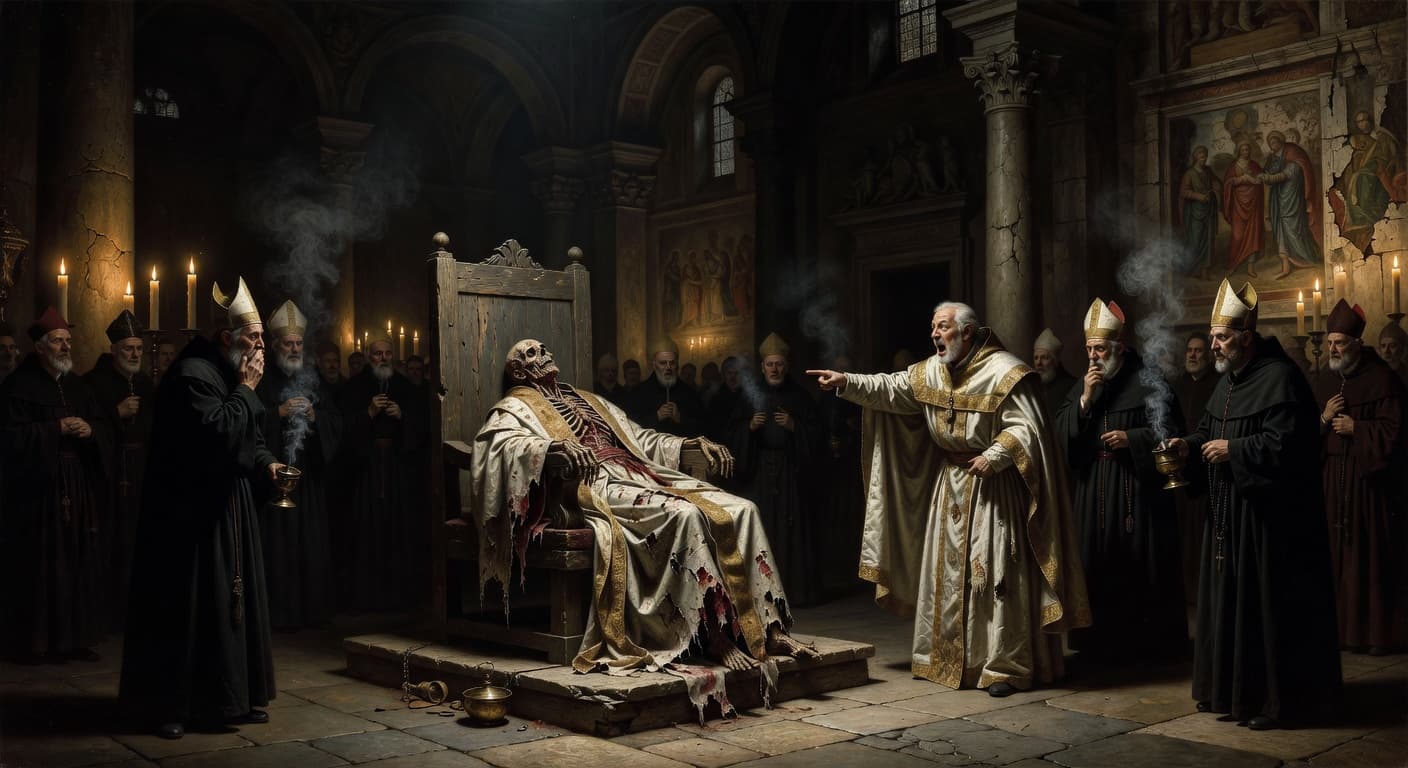
In January 897, Pope Stephen VI convened a trial that would become one of history's most grotesque spectacles. He ordered the nine-month-old corpse of his predecessor, Pope Formosus, exhumed from its tomb and dragged to the Basilica of St. John Lateran. The decomposed body was dressed in full papal vestments, propped upright on a throne, and formally prosecuted for ecclesiastical crimes. A terrified young deacon was assigned to answer charges on behalf of the rotting pontiff. Stephen VI hurled accusations of perjury, illegal ascension to the papacy, and presiding over multiple dioceses simultaneously. The corpse was found guilty. Its three blessing fingers were hacked off, its papal robes stripped away, and the mutilated remains were dumped into the Tiber River. A hermit later fished out the body. Rome erupted in horror. Within months, rioters stormed the Lateran, deposed Stephen VI, and strangled him in prison. The controversy didn't end there—subsequent popes overturned Formosus's conviction, reburied him in St. Peter's Basilica, then exhumed him again, then rehabilitated him again in a dizzying series of papal reversals. The entire episode exemplified the brutal factional warfare between Roman nobles and the Spoleto dynasty during the post-Carolingian power vacuum, when control of the papacy meant control of central Italy.