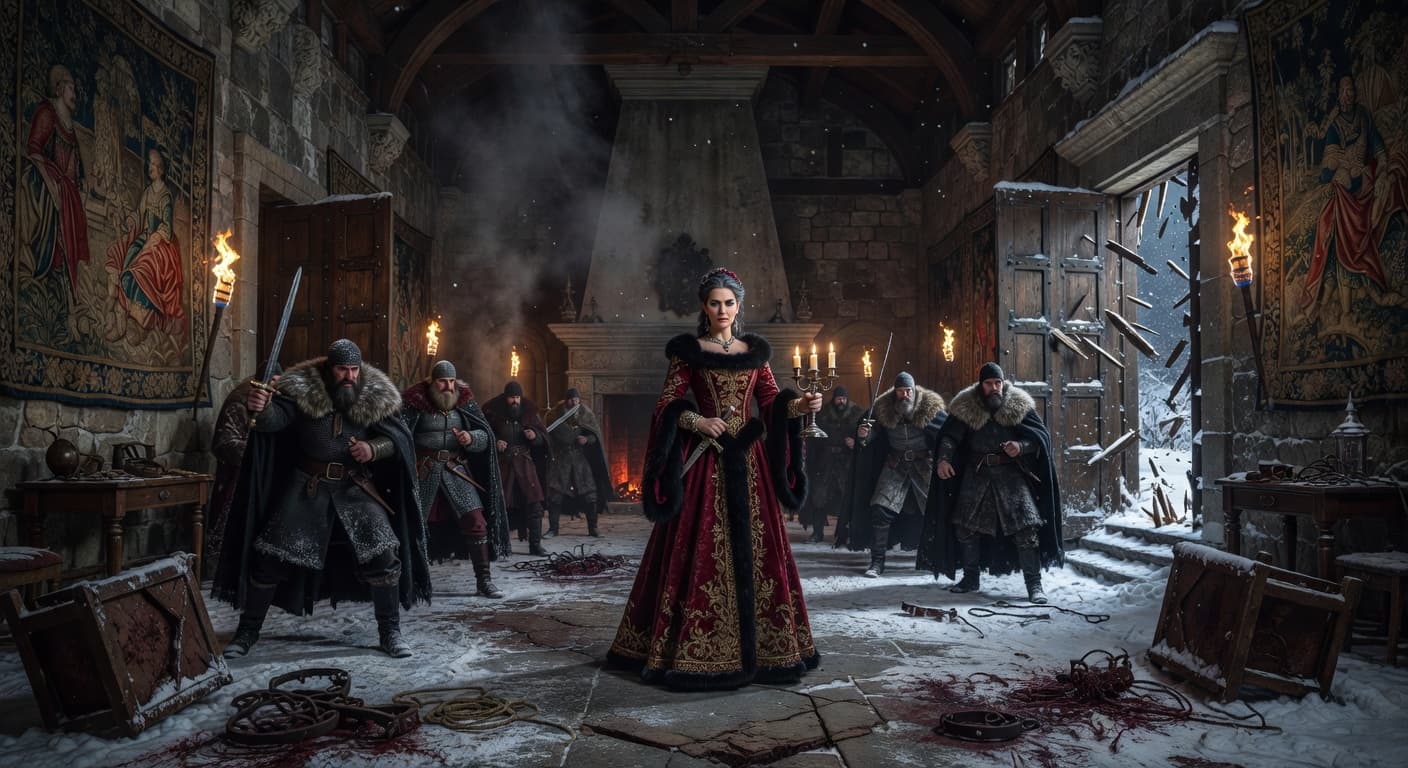
In December 1610, György Thurzó, Palatine of Hungary, led an armed company to Csejte Castle in what is now Slovakia. He had spent months collecting evidence against its mistress, Countess Elizabeth Báthory of Ecsed, based on complaints stretching back eight years. When they broke through the doors they found a dead girl in the hall, a dying girl, and several more imprisoned in the dungeons below. The countess protested her innocence and was placed under house arrest. Her servants were transported for questioning.
By the time the investigators had finished, they had collected over 300 witness testimonies — peasants, servants, nobility, clergy — all describing the same systematic pattern. Girls between the ages of ten and fourteen, daughters of local peasants recruited with promises of work as maids, were brought to the castle and tortured for weeks or months before dying. Witnesses described beatings severe enough to cause death, needles driven under fingernails, pins inserted into flesh, burning with irons, and in winter, girls stripped and forced into the snow or doused with water until they froze. The manservant János Újváry testified under interrogation that he personally recruited six of the 37 girls he knew had been killed. Three of Báthory's servants were tried on January 7, 1611: Újváry was beheaded, and two female accomplices had their fingers torn off before being burned alive.
The countess herself was never tried. Thurzó argued that executing a noblewoman of her rank would destabilize the kingdom; her family ruled Transylvania and held enormous political power. Instead she was walled into a set of rooms in Csejte Castle — windows bricked over, doors sealed except for a food slot — where she remained until her death in 1614. The official charge was eighty murders. A witness claimed the number was 650, citing a private register the countess supposedly kept. The famous story of bathing in virgin blood appears nowhere in the trial records and is almost certainly legend grafted onto documented atrocity.
Modern historians debate whether Báthory was guilty as charged or the target of politically motivated slander that allowed enemies to seize her lands and cancel significant debts owed to her family. The 300 witness testimonies remain in the Hungarian state archives, unresolved.