Back to Feed
Victorian · Llanfihangel-ar-Arth, Carmarthenshire, Wales
They Watched Her Starve
★ 9.0 / 10Victorian medicinechild welfarereligion vs sciencespectacle
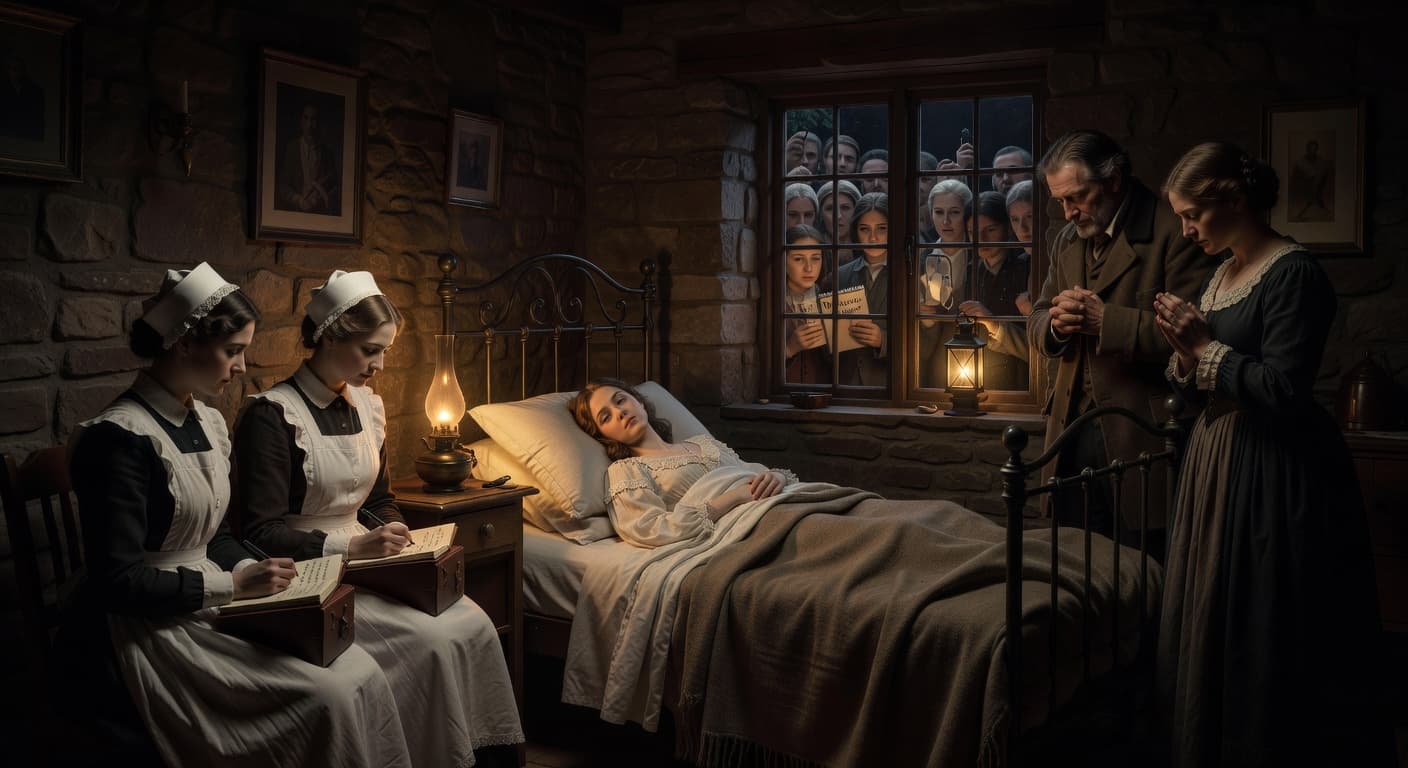
In October 1867, a Welsh farm girl named Sarah Jacob stopped eating. She was ten years old. Her parents, farmers in rural Carmarthenshire, announced that she had not consumed a morsel in months — that God was sustaining her. Pilgrims began arriving at the farm. Newspapers in London called her the "Welsh Fasting Girl" and published breathless accounts. Visitors brought gifts of money and flowers. Local doctors observed her and found no evidence of fraud. The phenomenon of "fasting girls" was not new — Victorian England had a persistent folklore of girls sustained by prayer and air — but Sarah became a national celebrity. The debate between medicine and religion played out in the pages of The Lancet and the Times. In spring 1869, a committee of prominent men organized the first "watch," monitoring the family to ensure Sarah was not secretly eating. They found nothing. The story grew larger. By autumn, the medical establishment demanded a properly supervised watch. Four trained nurses from Guy's Hospital in London arrived in December and maintained continuous, professional observation. They were told not to deny her food if she asked for it. She never asked. After two weeks, Sarah was clearly dying of starvation. Still no one intervened. The nurses had been told to observe, not treat. On December 17, 1869, twelve-year-old Sarah Jacob died, surrounded by nurses, doctors, and observers — all watching. Her parents were convicted of manslaughter and imprisoned. A sign on her grave still attracts tourists.
Score Dimensions
Original Source
wikipedia.orgLike
Dislike
Skip
Save