Back to Feed
Ancient · Rome, Italy
Call Me Lady: The Roman Emperor Who May Have Asked for Gender-Affirming Surgery in 220 AD
★ 8.8 / 10Roman historygender historydecadenceancient sexuality
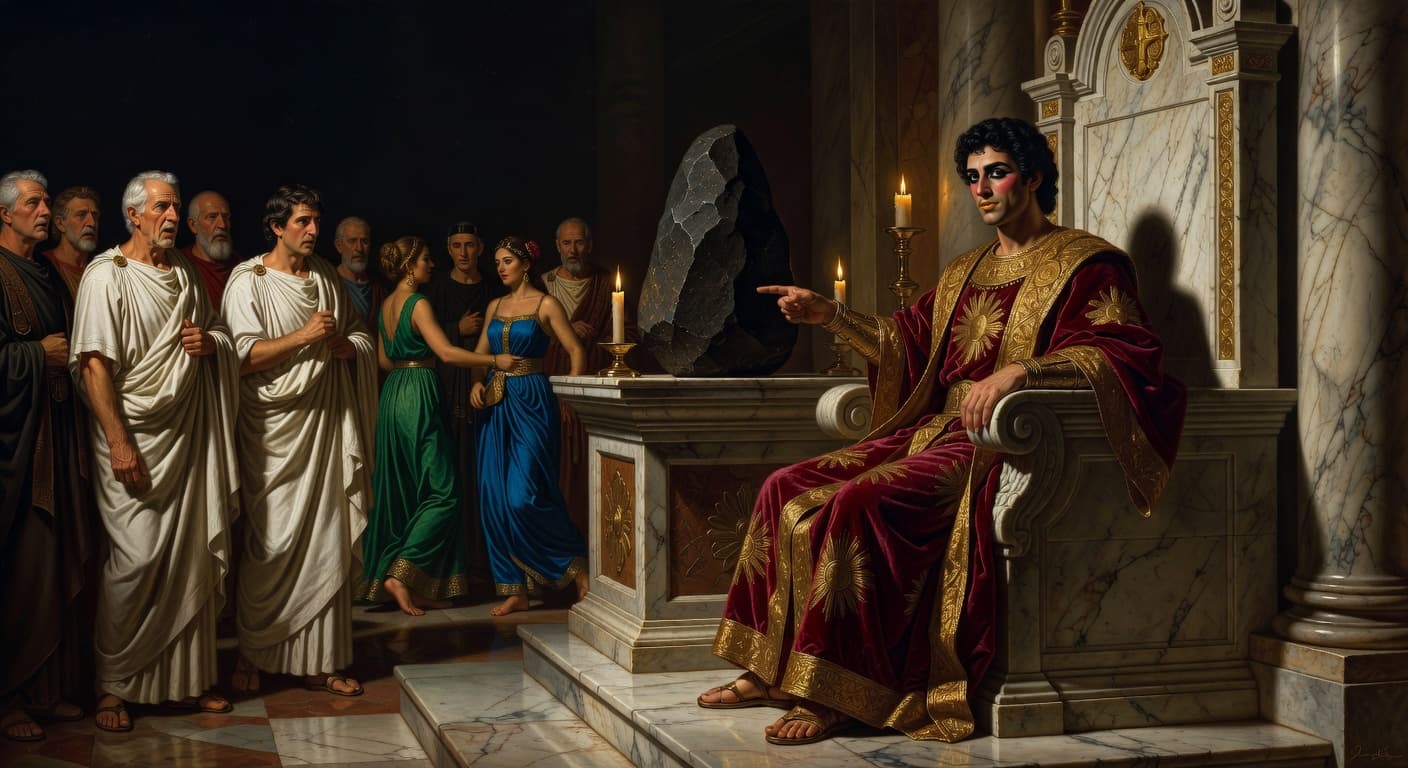
Marcus Aurelius Antoninus became Roman Emperor in 218 AD at the age of fourteen, installed by his grandmother Julia Maesa after her soldiers killed the previous emperor. He came from the Syrian city of Emesa (modern Homs) and brought with him the rituals of his deity, the sun god Elagabal — including public dancing, the wearing of effeminate robes, and the application of cosmetics that scandalized the Roman senate. The teenage emperor, known to history as Elagabalus, would reign for four years before being assassinated at eighteen. In that time, he would marry and divorce five women and at least one man. The primary sources are the senatorial historian Cassius Dio — who wrote under Elagabalus's cousin and assassin, Severus Alexander — and the Historia Augusta, a notoriously unreliable late Roman compilation. Both describe behaviors that read, in a modern framework, as consistent with a female gender identity. Dio wrote that Elagabalus was "termed wife, mistress, and queen," preferred to be addressed as "Lady" rather than "Lord," and reportedly told his lover Hierocles — a blonde slave charioteer whom the emperor called his husband — "Do not call me Lord, for I am a Lady." According to Dio's Roman History (80.16.7), the emperor also offered large sums of money to any physician who could provide him with female genitalia through surgery. Scholarship is divided on how much to trust these accounts. Roman writers routinely used accusations of effeminacy as slander against emperors they disliked, and Dio had every incentive to blacken Elagabalus's reputation to flatter his patron. Sexual accusations were also used systematically against Syrian and Eastern emperors as a form of ethnic prejudice. In 2023, the North Hertfordshire Museum formally adopted female pronouns for Elagabalus, citing the historical record. What remains clear is that, whatever the emperor's own inner life, Roman sources in the 3rd century documented in detail a ruler who expressed a female identity, requested female anatomy, and lived outside any gender category Rome normally recognized — and that this documentation survived 1,800 years before anyone applied a word to it.
Score Dimensions
Original Source
wikipedia.orgLike
Dislike
Skip
Save