Back to Feed
Industrial · Earth
The Carrington Event
★ 9.0 / 10astronomydisastertechnology
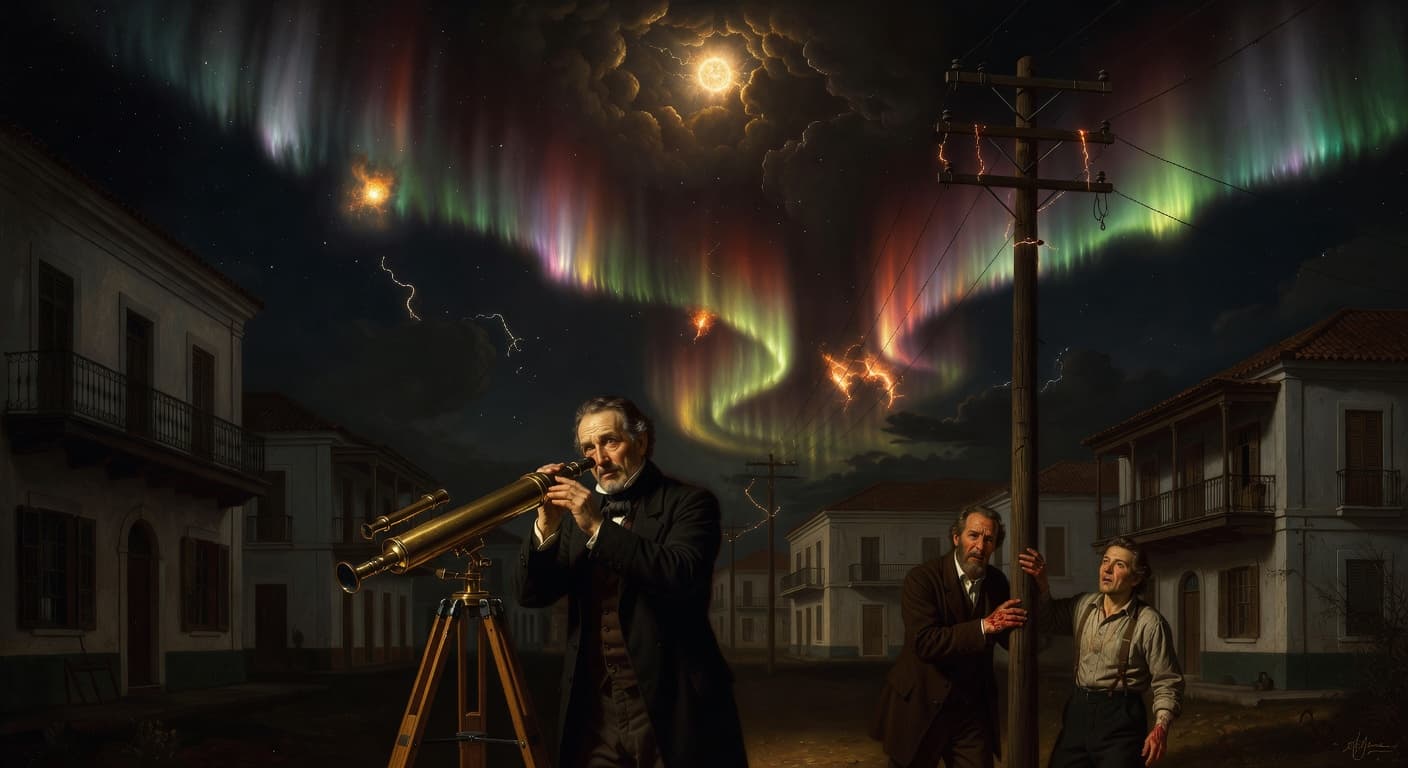
On September 1-2, 1859, the largest geomagnetic storm in recorded history struck Earth. British astronomer Richard Carrington observed massive solar flares. Within hours, the planet's magnetic field went haywire. Telegraph systems worldwide failed. Operators received electric shocks. Some telegraph pylons threw sparks. Paper in telegraph offices caught fire. Aurora borealis appeared as far south as the Caribbean—people in Cuba saw the northern lights. In the Rocky Mountains, gold miners woke thinking it was dawn and started making breakfast at 1 AM. Compasses spun uselessly. The storm lasted three days. If the Carrington Event happened today, it would cause catastrophic damage. Modern civilization depends on electrical grids, satellites, GPS, and communication networks—all vulnerable to geomagnetic storms. Estimates suggest a Carrington-level event could cause $2 trillion in damage and take years to recover from. Solar physicists monitor the sun for similar events. In 2012, a comparable solar flare missed Earth by nine days. We got lucky. The next one might not miss.
Score Dimensions
Original Source
wikipedia.orgLike
Dislike
Skip
Save