
Back to Feed
Modern · Western Australia
The Emu War of 1932
★ 9.0 / 10waranimalsabsurdity
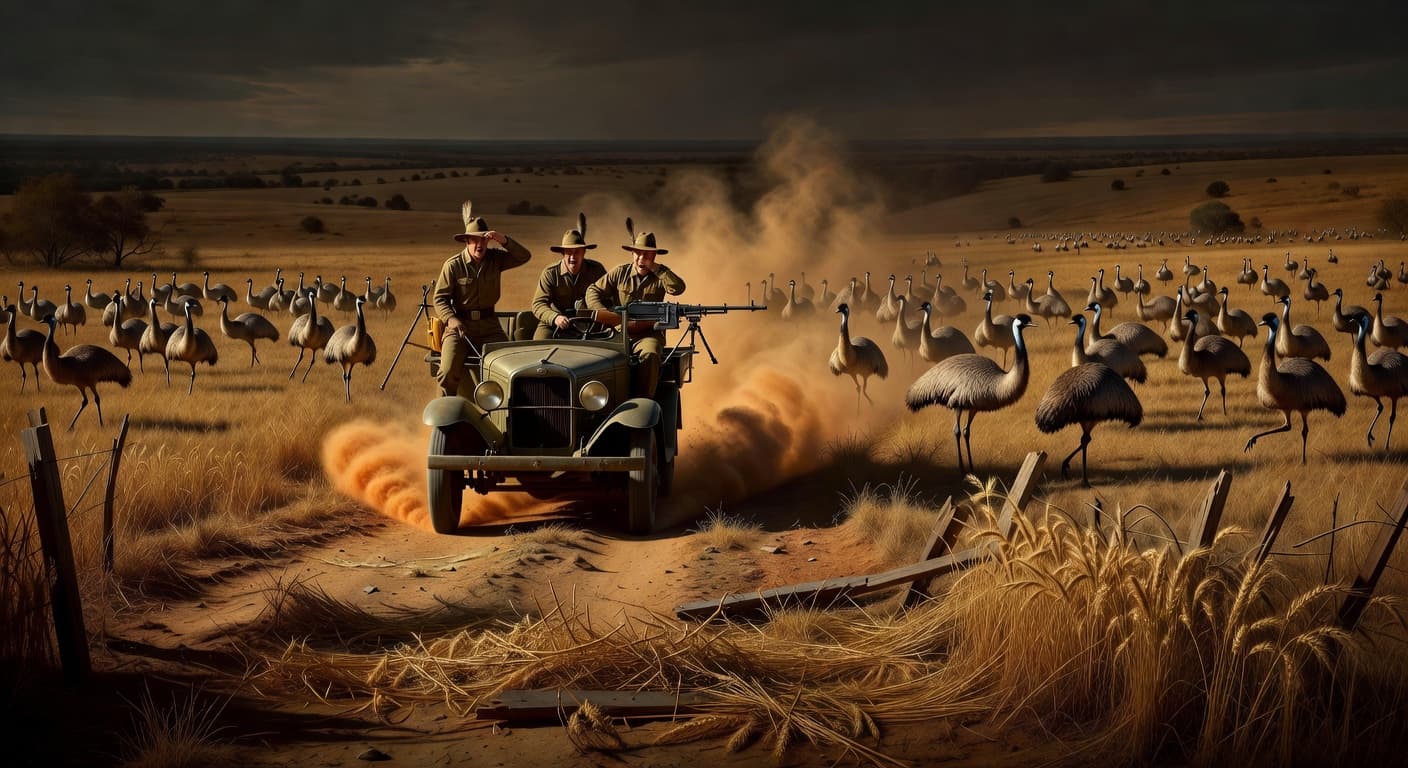
After World War I, Australian veterans were given farmland in Western Australia. By 1932, over 20,000 emus migrated to the area, destroying crops. Frustrated farmers requested military assistance. The government deployed soldiers with machine guns in what became known as the Great Emu War. The emus proved surprisingly effective combatants—they could run at 30 mph, scattered when attacked, and their thick plumage deflected bullets. After six days and 2,500 rounds of ammunition, only a few hundred emus were confirmed killed. The military withdrew in embarrassment. A second attempt was made, but results were similarly poor. One commander remarked that the emus had 'guerrilla tactics'—they would split into small groups, making them difficult targets. The military gave up, and the government instead implemented a bounty system that proved more effective. The emus won.
Score Dimensions
Original Source
wikipedia.orgLike
Dislike
Skip
Save